Destinations
The Sahara at Golden Hour
The Science of Golden Hour
Golden hour occurs in the last hour before sunset when the sun is low on the horizon. The light travels through more of the atmosphere, scattering blue wavelengths and leaving warm reds and oranges. In the Sahara, where there is no haze or pollution, this effect is amplified. The sand — already golden from its iron oxide content — catches the light and seems to glow from within.
Erg Chebbi: Where the Dunes Come Alive
Erg Chebbi is a sea of sand dunes stretching 22 kilometers along the Algerian border near Merzouga. The tallest dunes reach 150 meters — tall enough to cast long shadows that stretch across the valley floor. At golden hour, each dune becomes a study in contrast: one face blazing in direct sunlight, the other sinking into deep purple shadow. The ridge lines sharpen into knife-edge curves that photographers travel thousands of kilometers to capture.
The Camel Trek
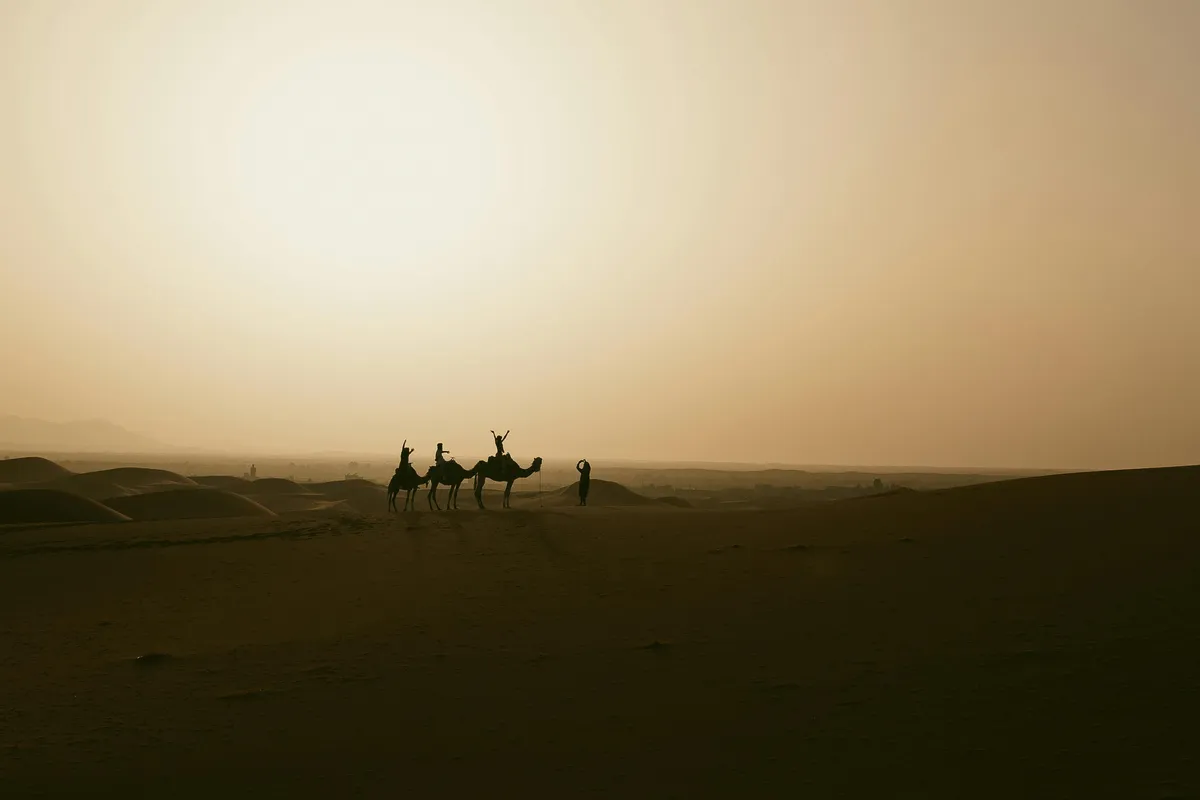
The traditional way to experience golden hour in the Sahara is from the back of a camel. Departing from Merzouga in the late afternoon, you ride into the dunes as the light begins to soften. The caravan moves slowly — camels have a rolling gait that matches the rhythm of the desert. By the time you reach the base camp, the sun is touching the horizon and the entire desert is on fire.
After the Sun Goes Down
Golden hour does not end when the sun disappears. The afterglow — known as the Belt of Venus — paints the eastern sky in pink and lavender. The temperature drops rapidly. The silence deepens. Stars begin to appear, first faintly, then in numbers that city dwellers have never seen. This is the moment when the Sahara reveals its other gift: darkness so complete that the Milky Way casts a shadow.